Abstrakts:
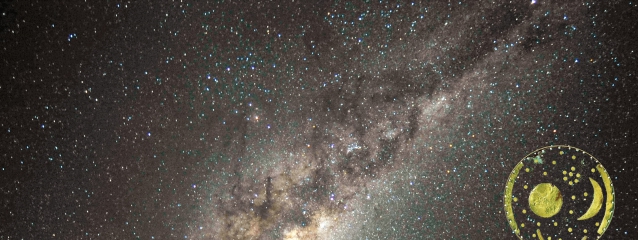
Die ca. 3600 Jahre alte Himmelsscheibe von Nebra erweist sich als ein Kompendium.
D. h., sie ist eine Zusammenfassung, aller mit bloßem Auge zu beobachtenden Himmelsphänomene.
Als ein geschlossenes Zeichensystem zeigt sie nicht nur die von SCHLOSSER nachgewiesenen Azimutbereiche der Auf- und Untergänge der Sonne zwischen den Sonnenwenden. Sondern man findet auf ihr ebenfalls die extremalen Höhen von Sonne und Mond in konkreten Winkelmaßen zu deren jahreszeitlichen Eckdaten (beim Mond im Saroszyklus).
Die in den bisherigen Darstellungen missdeuteten Randlöcher sind integrative und sinngebende Strukturmerkmale.
Ihre Anzahl und Verteilung sind von die Grundlage für das Verständnis und den Aufbau der ikonografischen"Textur" der Scheibe. Alles ist genial versteckt und analog zu den tatsächlichen kalendarischen Daten kodiert.
Für die Entschlüsselung muß der gesamte Symbolkomplex fragmentiert, d. h. in Zeichengruppen zerlegt werden.
Diese bilden Struktureinheiten, die in ihren Eigenschaften informativ sind.
Wir finden "verborgene" Symmetrien, Regelmäßigkeiten, Zahlenwerte und Winkelmaße, die die Realität am Himmel getreu wiedergeben.
U. a. finden wir Hinweise auf die Erscheinungen der Planeten und des Mondes vor dem Hintergrund und nach einer stattgefundenen und wohl persönlich erlebten Sonnenfinsternis.
Ihre Randstrukturen verweisen auf das geordnete System eines Sonnenkalenders mit integriertem Schaltjahr.
Abstract
This treatise proves the fact that the Sky Disk of Nebra, 3600 years old, contains the completely codified results of observations concerning celestial phenomena. In addition to the clearly marked azimuthical spaces of rise and settings of sun and moon between the solstices throughout the year, their extreme heights on important calendar days are also shown on the disk. Their angles are, however, hidden and precisely transmitted in accordance with the reality of 2.000 B. C. Even though the 39 holes at the edge of the disk were neglected in past and popular interpretations, these marks turned out to be extremely important and must be considered as integrated elements in order to decipher and understand the puzzle. They are meaningful devices for the semiotic analysis of the structured symbolism of the disk. Their number and distribution are essential for decoding its constructional principles. In order to understand them, the symbols that are homogeneously represented have to be fragmented in meaningful and coherent clusters. Moreover there are a number of skilfully hidden features showing the celestial appearances of the planets and the moon. Everything that moves in the sky is symbolized on the disk. Specific elements at the brink represent the beginning and end of a simple and systematic calendar up to the 366th day of the leap-year. All this is ingeniously designed - assembled on the background of an eclipse of the sun the constructors most probably had previously experienced
 Druckversion